Two Ways of Knowing — And Why the Faster One Deceives You
What Kahneman's masterwork tells us about AI, shortcuts, and what it actually means to think.
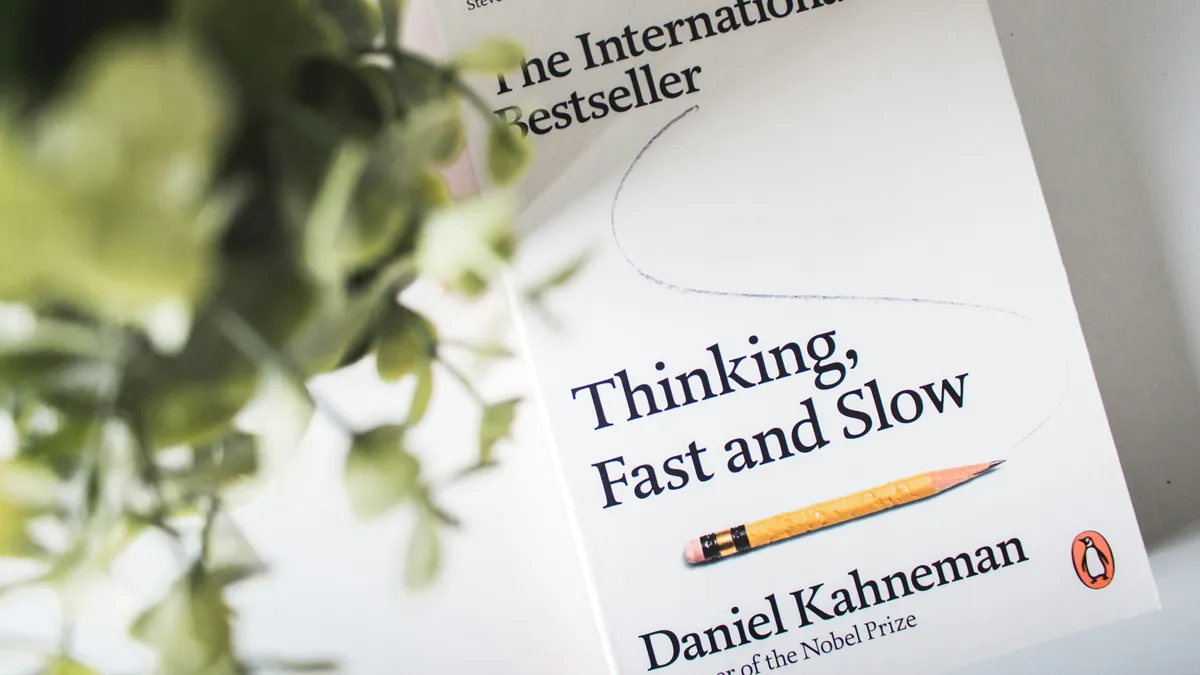
In Thinking, Fast and Slow, Nobel-winning psychologist Daniel Kahneman introduces one of the most useful frameworks for understanding human behaviour: the idea that we operate on two distinct systems of thought.
System 1 is fast, automatic, and intuitive. It pattern-matches at speed, draws on emotion and prior experience, and fires before you're even aware it has. It's the system that finishes sentences, reads a room, and makes snap judgements. Brilliant, efficient — and frequently wrong in ways you won't notice.
System 2 is slow, deliberate, and effortful. It checks assumptions, weighs evidence, holds contradiction without collapsing it into a premature conclusion. It's the system that does the actual thinking. It's also the system we avoid using whenever we can — because it costs energy, takes time, and demands that we sit with uncertainty rather than escape it.
Kahneman's uncomfortable finding is that System 1 runs the show far more than we like to believe. System 2 is lazy by design. It steps in only when we actively force it to. Left to itself, the brain cuts corners — and does so smoothly enough that we rarely notice we've cut them.
Why the distinction matters
The stakes of this vary enormously by context. For most everyday decisions, fast thinking is good enough. But for the questions that actually matter — complex problems, strategic choices, genuine inquiry — System 1 is a liability wearing the mask of confidence.
The cognitive biases Kahneman catalogues — anchoring, loss aversion, the illusion of validity, overconfidence — are all System 1 artefacts. They arise not because we're careless, but because we're efficient. We reach for the nearest plausible answer and move on. The error isn't in the speed. It's in mistaking speed for depth.
System 2 thinking is what catches those errors. But only if we actually use it.
The AI shortcut problem
This is where things get pointed for anyone working with AI tools today.
AI is extraordinarily good at producing System 2-shaped outputs: structured, articulate, reasoned-sounding responses that arrive in seconds. The problem is that generating them required no System 2 thinking from you. You posed a question. A fluent, confident answer appeared. You moved on.
But the tension you should have sat with, the resistance you should have examined, the assumptions that deserved real scrutiny — none of that happened. You outsourced the discomfort that deliberate thinking requires. And discomfort, it turns out, is where the insight lives.
This isn't an argument against AI. It's a sharper one: AI used carelessly doesn't make you think faster. It makes you feel like you've thought something through when you haven't engaged with it at all. That's the subtler risk — not replacement, but the convincing simulation of depth.
The question worth asking is not did AI produce a good answer? but did I actually think?
Built for low gear
NotesCanvas was built around a different premise: that meaningful thinking requires a structure that slows you down in the right places.
At its centre sits the Orientation Frame — a bounded space holding four Orientation Cards, one of which is your driving Question. The others help you approach that question from multiple directions before you rush toward a conclusion. On the edges of the frame, four anchors define how your thinking engages with the question:
- SUPPORTS — What confirms, validates, or flows naturally from your inquiry?
- TENSIONS — What resists it? Where is the doubt, the opposition, the friction?
- CONTEXT — What nuance, dependencies, or reframing does this question demand?
- EMERGES — What causes, outcomes, or new questions grow from engaging with it honestly?
The frame isn't just a container. It's an interface — the point where your orientation meets the notes you're working with. And because NotesCanvas is a spatial canvas, proximity carries meaning. A note placed close to the frame is in direct conversation with your inquiry. One placed further away sits at the edge of relevance, waiting. Distance itself becomes part of the thinking.
AI within NotesCanvas is there to support that process — to help you connect notes, surface patterns, and sharpen the question at the centre. Not to hand you a conclusion and call it thinking.
Kahneman's core insight is that we don't think slowly by default. We have to choose it — and the choice requires friction, structure, and the willingness to stay in the question a little longer than feels comfortable.
NotesCanvas is built for low gear. Because that's where understanding lives.
Start with a question that matters. See what emerges when you don't skip to the answer.
Photo by Monica Sauro on Unsplash